
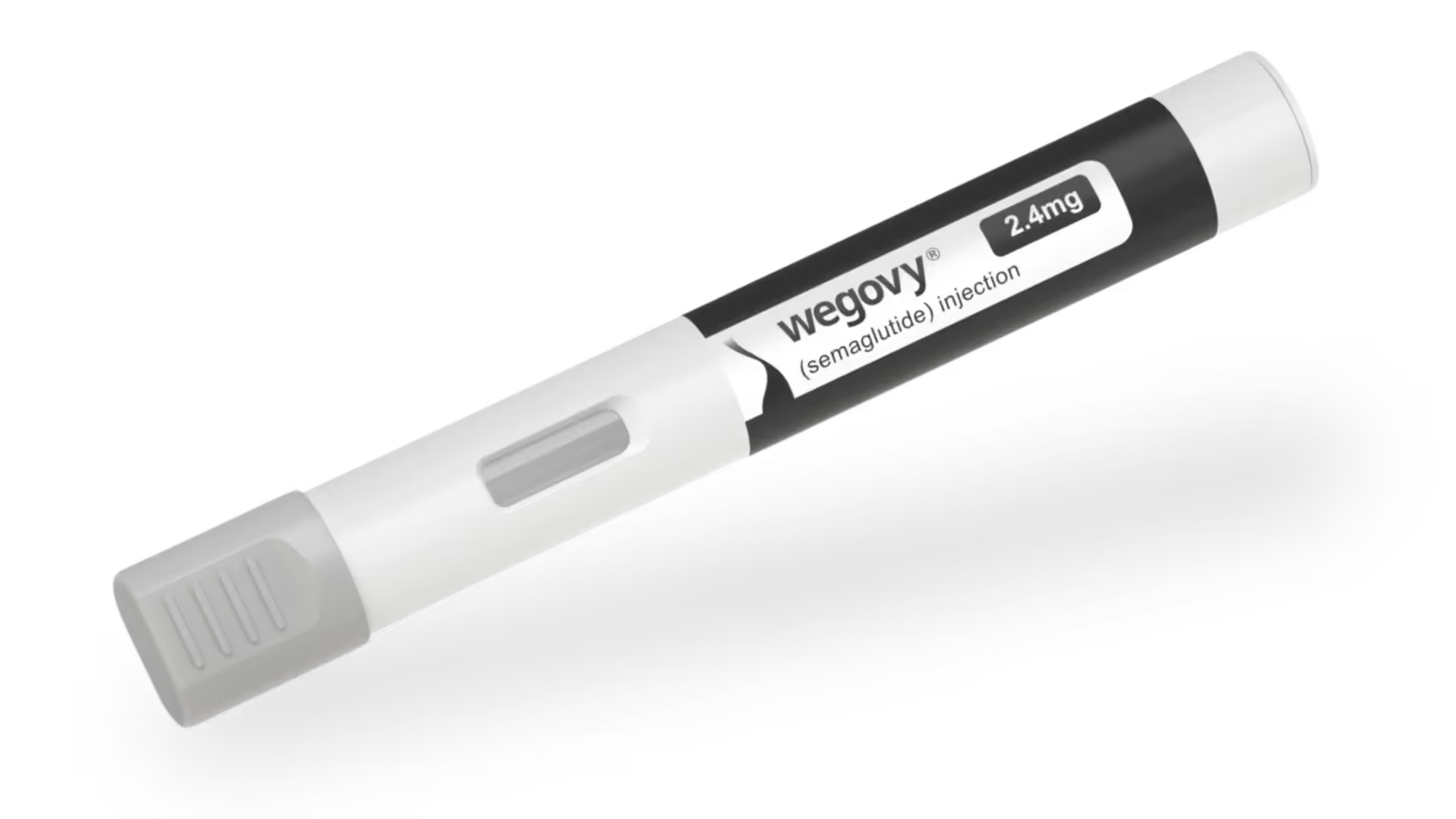
Semaglutide dosing: a step-by-step titration programme
Semaglutide does not work at full strength from day one. The dosing schedule for semaglutide is deliberately structured in stages so that your body can get used to the medicine and side effects are kept to a minimum. In this article, you can read exactly what this titration plan looks like, what the differences are between Ozempic and Wegovy, and what you can expect at each stage of treatment.
Why semaglutide is titrated in stages
Semaglutide stimulates GLP-1 receptors in the brain and gastrointestinal tract. This leads to reduced feelings of hunger, slower gastric emptying and, ultimately, weight loss. It is precisely this delay in gastric emptying that is also the reason why you may experience nausea, diarrhoea or vomiting at the start. By gradually increasing the dose, the body gives itself time to get used to the effect. Clinical studies show that this titration protocol significantly reduces side effects without affecting the final efficacy.
The titration schedule for Wegovy (2.4 mg per week)
Wegovy is the variant of semaglutide specifically authorised for weight management. The dosing schedule for Wegovy consists of five phases, spanning a total of sixteen weeks:
Phase 1 lasts for the first four weeks. You start with 0.25 mg per week. This is a starting dose intended solely for acclimatisation; at this level, no significant weight loss can yet be expected. Phase 2, weeks five to eight inclusive, increases the dose to 0.5 mg per week. In phase 3 (weeks nine to twelve) the dose is increased to 1.0 mg, and in phase 4 (weeks thirteen to sixteen) to 1.7 mg. From week seventeen, you reach the maintenance dose of 2.4 mg per week.
Each injection is administered subcutaneously in the abdomen, on the upper thigh or on the upper arm. You should rotate injection sites to avoid irritation. In the STEP 1 study, participants lost on average almost 15% of their body weight after 68 weeks on this regimen, as clinical research shows.
The titration schedule for Ozempic (maximum 2.0 mg per week)
Ozempic contains the same active ingredient but is approved for type 2 diabetes, not for weight management. The titration schedule is slightly more compact: you start with 0.25 mg per week for four weeks, then switch to 0.5 mg as a maintenance dose and, if necessary, can increase to 1.0 mg and eventually 2.0 mg per week. Would you like to read more about exactly how Ozempic works and what you can expect? You can read about this on Goodweigh’s Ozempic page.
When is the dose increased?
The dose increase does not happen automatically at a fixed time. Your treating doctor will assess whether you are ready for the next step. The criteria include, among other things: how well you tolerate the current dose, whether gastrointestinal symptoms have subsided, and whether sufficient weight loss is occurring. It is also possible that the doctor may decide to extend a phase if it is clinically appropriate. The schedule is a guideline, not a fixed commitment.
Real-world data shows that less than a quarter of patients actually reach the maximum dose of 2.4 mg. Nevertheless, the majority of participants who continued for twelve months or longer achieved weight loss of over 14%, which is consistent with the results of controlled clinical trials. The conclusion is that the step-up plan is the goal, not the maximum dose.
What if you cannot tolerate the maximum dose?
Some people experience persistent nausea or vomiting at higher doses. In that case, you can continue on a lower dose in consultation with your doctor. This is not a sign that the treatment is not working, but an adjustment to your body. Side effects tend to subside in most people the longer the treatment continues. You can read more about what may occur with semaglutide in the overview of side effects of Ozempic for weight loss. Always contact your doctor if the side effects are severe or persistent.
What if you miss an injection?
If you have missed a weekly injection, you can still administer it if there are at least two days until the next scheduled injection. If you are closer to the next injection day, skip the missed dose and continue with the normal schedule. Never double the dose. If in doubt, it is wise to contact your healthcare provider.
Semaglutide and long-term weight loss
The dosing schedule is designed for long-term use. Studies of what happens after discontinuing semaglutide show that, on average, people regain two-thirds of the weight they lost within a year of finishing treatment. This emphasises that semaglutide is not intended as a short-term fix, but as part of a broader lifestyle intervention. At Goodweigh, the medication is therefore always combined with coaching and medical guidance. Read more about Goodweigh’s programme.
Am I eligible for semaglutide?
Semaglutide (such as Wegovy) is approved for adults with a BMI of 30 or above, or a BMI of 27 or above in combination with weight-related health problems such as high blood pressure or sleep apnoea. Whether you are eligible depends on several factors. Read the criteria in the article on when you are eligible for GLP-1 medication. You can also start an initial consultation directly via Goodweigh: the doctor will assess your situation and draw up a treatment plan that suits you.
Referencer
- Wilding, J. P. H., Batterham, R. L., Calanna, S., Davies, M., Van Gaal, L. F., Lingvay, I., McGowan, B. M., Rosenstock, J., Tran, M. T. D., Wadden, T. A., Wharton, S., Yokote, K., Zeuthen, N., & Kushner, R. F. (2021). Once-weekly semaglutide in adults with overweight or obesity. New England Journal of Medicine, 384(11), 989–1002. https://doi.org/10.1056/NEJMoa2032183
- Rubino, D., Abrahamsson, N., Davies, M., Hesse, D., Greenway, F. L., & STEP 4 Investigators. (2021). Effect of continued weekly subcutaneous semaglutide vs placebo on weight loss maintenance in adults with overweight or obesity: The STEP 4 randomized clinical trial. JAMA, 325(14), 1414–1425. https://doi.org/10.1001/jama.2021.3224
- Wilding, J. P. H., Batterham, R. L., Davies, M., Van Gaal, L. F., & STEP 1 Study Group. (2022). Weight regain and cardiometabolic effects after withdrawal of semaglutide: The STEP 1 trial extension. Diabetes, Obesity and Metabolism, 24(8), 1553–1564. https://doi.org/10.1111/dom.14725
- Samuels, J. M., Ye, F., Irlmeier, R., Silver, H., Srivastava, G., & Spann, M. (2025). Real-world titration, persistence and weight loss of semaglutide and tirzepatide in an academic obesity clinic. Diabetes, Obesity and Metabolism, 27(11), 6200–6209. https://doi.org/10.1111/dom.70004
Your final weight-loss programme
Transform your life with the Goodweigh weight loss programme, designed for lasting success.